
Effective Corporate Retention Strategies for Long-Term Success

Instead of chasing new clients at every turn, what if your existing ones stayed longer, spent more, and told others about you?
Through retention-first strategies, you can deepen client engagement, strengthen loyalty, and unlock long-term value. The result? Stronger relationships, sustainable growth, and a reputation clients don’t want to leave.
In this post, you will discover practical and effective corporate retention strategies that empower your business to grow sustainably by focusing on the clients you already have.
Let’s explore how you can shift your mindset and approach to make client retention your competitive advantage.
Why Corporate Retention Strategies Matter
Focusing on corporate retention strategies means prioritizing the clients who already trust you. It’s not just about keeping them; it’s about making them feel valued and understood. When you do this well, your clients become advocates who bring in referrals and increase their own spending.
Here’s why retention is crucial:
Cost Efficiency: Acquiring new clients can cost five times more than retaining existing ones.
Higher Revenue: Loyal clients tend to spend 67% more than new clients.
Stronger Relationships: Long-term clients provide valuable feedback and insights.
Sustainable Growth: Retention builds a stable revenue base, reducing volatility.
By investing in retention, you create a foundation for growth that doesn’t rely on constantly finding new leads.

Key Corporate Retention Strategies You Can Implement Today
To deepen engagement and loyalty, you need a clear plan. Here are some of the most effective strategies you can start using right now:
1. Personalize Your Client Experience
Clients want to feel like more than just a number. Use data and insights to tailor your communications, offers, and services to their specific needs.
Use CRM tools to track client preferences and history.
Send personalized emails or messages that address their unique challenges.
Offer customized solutions rather than one-size-fits-all packages.
2. Communicate Regularly and Transparently
Keep your clients informed about updates, changes, and opportunities. Transparency builds trust.
Schedule regular check-ins or review meetings.
Share progress reports and performance metrics.
Be honest about challenges and how you plan to address them.
3. Deliver Consistent Value
Your clients stay because they see ongoing value in your partnership.
Provide educational content, such as webinars or whitepapers.
Offer exclusive access to new products or services.
Implement loyalty programs or incentives for repeat business.
4. Actively Seek and Act on Feedback
Show your clients that their opinions matter.
Use surveys or direct conversations to gather feedback.
Respond promptly to concerns or complaints.
Make visible improvements based on client suggestions.
5. Build Strong Relationships Beyond Business
People do business with people they like and trust.
Celebrate client milestones or achievements.
Invite clients to events or networking opportunities.
Share relevant industry news or insights that benefit them.
By integrating these strategies, you create a client experience that encourages loyalty and long-term engagement.
How to Measure the Success of Your Retention Efforts
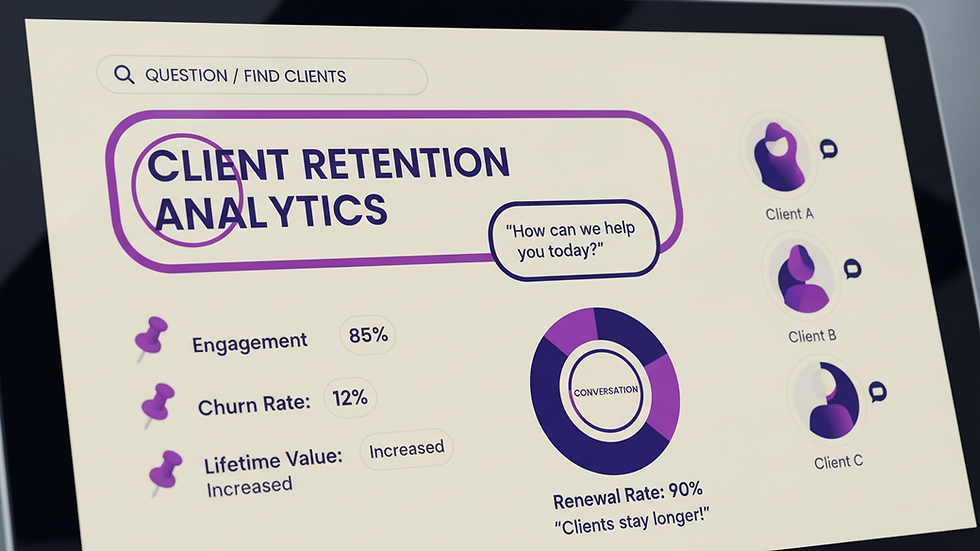
Knowing whether your strategies are working is essential. Use these key performance indicators (KPIs) to track progress:
Client Retention Rate: Percentage of clients who continue doing business over a period.
Customer Lifetime Value (CLV): Total revenue expected from a client during the relationship.
Net Promoter Score (NPS): Measures client willingness to recommend your business.
Repeat Purchase Rate: Frequency of clients making additional purchases.
Churn Rate: Percentage of clients lost during a specific timeframe.
Regularly reviewing these metrics helps you adjust your approach and focus on what drives the best results.
Leveraging Technology to Enhance Client Retention
Technology can be your ally in building stronger client relationships. Here are some tools and approaches to consider:
Customer Relationship Management (CRM) Systems: Centralize client data and automate personalized communications.
Marketing Automation: Schedule targeted campaigns based on client behaviour.
Client Portals: Provide easy access to information, support, and resources.
Analytics Platforms: Gain insights into client trends and preferences.
Feedback Tools: Collect and analyze client opinions efficiently.
By integrating technology, you streamline your retention efforts and create a seamless client experience.
Empower Your Business with Retention-First Thinking
Shifting your focus from constant acquisition to client retention is a game-changer. When you prioritize your existing clients, you unlock deeper engagement, stronger loyalty, and sustainable growth. This approach not only maximizes the value of your current relationships but also builds a reputation that attracts new clients organically.
For more insights and practical tips, explore more of my blog posts to stay updated on the latest trends and strategies.
Remember, retention is not just a tactic - it’s a mindset. By investing in your clients today, you secure your business’s success tomorrow.


Comments